
Choosing the right wet saw can make the difference between a clean, professional finish and a job that wastes time, materials and money.
Whether you are laying porcelain paving, cutting tiles for a bathroom, trimming suitable natural stone or working through regular site cuts, the right machine needs to match the material, the cut length and the level of accuracy required.
In this guide, we explain what wet saws are used for, why they are often the best choice for hard materials, and how to choose a model that suits the job. We will also look at key features such as cutting length, blade size, water cooling, plunge cutting and site-friendly design, so you can make a practical decision before you buy.
A wet saw is an electric cutting machine designed to cut hard materials using a diamond blade and a water cooling system.
The water plays an important role. It helps to:
This makes wet saws particularly useful when working with porcelain, ceramic, stone and some paving materials, depending on the saw, blade and manufacturer guidance.
Unlike a basic manual tile cutter, a wet saw does not rely on scoring and snapping. Instead, the powered blade cuts through the material in a controlled way, which is useful for thicker, denser or more expensive products where accuracy matters.
Wet saws are widely used across landscaping, building and tiling work. They are especially useful where a standard cutter would struggle with material thickness, hardness or cut complexity.
Common wet saw uses include:
For homeowners and DIYers, a wet saw can make a demanding project more manageable. For builders and landscape gardeners, it is often a site essential because it improves consistency, speed and finish quality.
Manual tile cutters are useful for straightforward tile work. They are portable, cost-effective and suitable for many simple straight cuts.
A wet saw is usually the better choice when the job involves:
The main advantage is control. A good wet saw lets you guide the material or cutting head smoothly through the cut, while the water system helps keep the blade working efficiently.
For high-value materials such as porcelain paving, this matters. Poor cuts can lead to chipped edges, wasted slabs and extra finishing work. A suitable wet saw helps reduce that risk.
The right wet saw depends on the type of work you do most often. Before choosing a model, look at the material, size of the tile or slab, site conditions and the level of portability needed.
This is one of the most important specifications. A saw that is too short will not handle larger slabs or tiles properly.
For example, the Rubi DC-250-850 Python 50HZ wet saw offers a maximum cutting length of 98cm, making it a practical choice for many tile and slab cutting jobs where a compact but capable machine is needed.
For longer materials, the Rubi DC-250-1200 Python 50HZ wet saw provides a maximum cutting length of 121cm, or 128.5cm with plunge effect, giving extra capacity for larger format work.
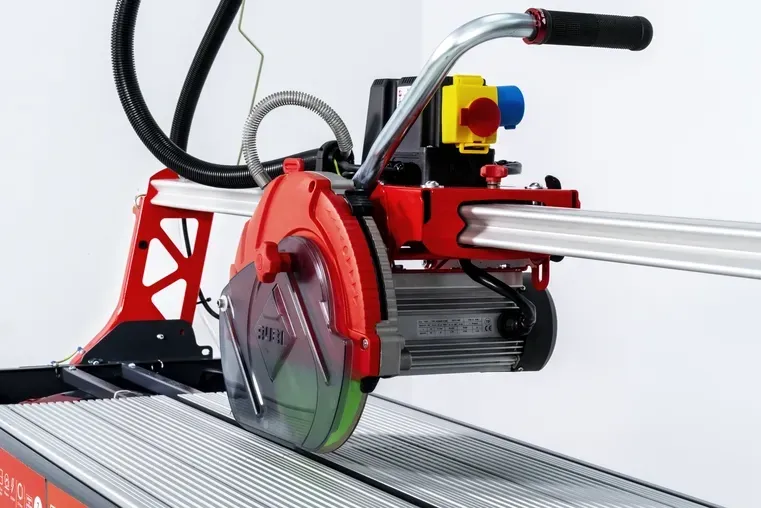
A 250mm blade is common across many professional wet saws and gives a strong balance of cutting capacity, control and availability of replacement blades.
Choosing the right diamond blade for the material is just as important as choosing the saw itself. Porcelain, ceramic, natural stone and paving materials can all require different diamond blade types for the best finish.
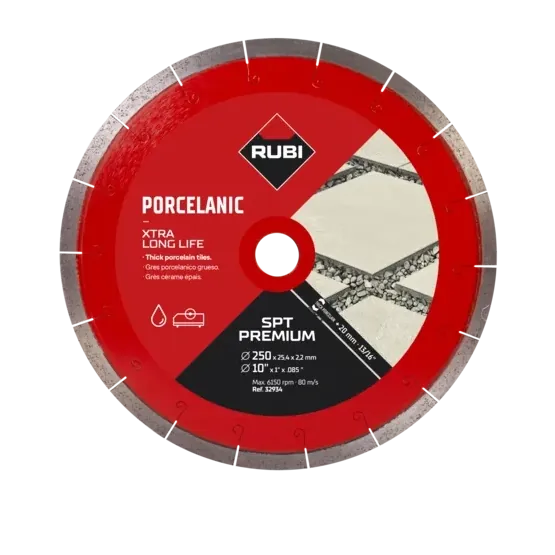
A well-designed water system supports blade performance and helps reduce airborne dust.
Models with systems such as C3 Python cooling are useful because they apply water efficiently to the cutting area. This helps control heat, supports blade life and keeps the work area more manageable.
For trade users, weight, wheels, folding legs and working height make a real difference.
A saw may perform well in a workshop, but landscaping and building sites often involve uneven ground, regular movement and limited space. Look for a stable frame, practical transport features and a set-up that suits real site conditions.
KPT Timber supplies a focused range of wet saws suited to trade users and confident DIYers taking on larger tiling or landscaping projects. The best option depends on the scale of work and the cutting capacity needed.
The Rubi DC-250-850 Python 50HZ wet saw is a strong option for users who need a practical machine for porcelain, ceramic and similar materials without stepping up to the longest cutting beds.
This makes it a useful choice for regular tiling and landscaping tasks where accuracy and clean cuts matter.
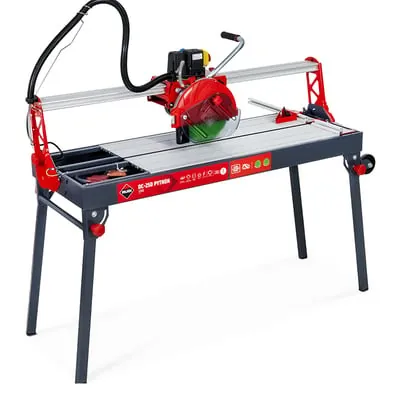
The Rubi DC-250-1200 Python 50HZ wet saw provides longer cutting capacity while keeping many of the practical features needed for site work.
This is well suited to larger format materials, patio projects and professional cutting where a longer bed is needed.
The Rubi DC-250 Smart Advance 1200 50HZ wet saw is designed for users who need reliable cutting performance across larger materials.
This model is a suitable option for professional tilers, landscapers and builders who need steady performance and precision.
For larger and more demanding projects, the Rubi DCX-250 Expert 1250 50HZ wet saw and DCX-250 Expert 1550 50HZ wet saw offer the extra stability and capacity often needed on professional sites.
For contractors cutting large format porcelain, ceramic tiles and occasional natural stone on site, the Expert range is worth considering.
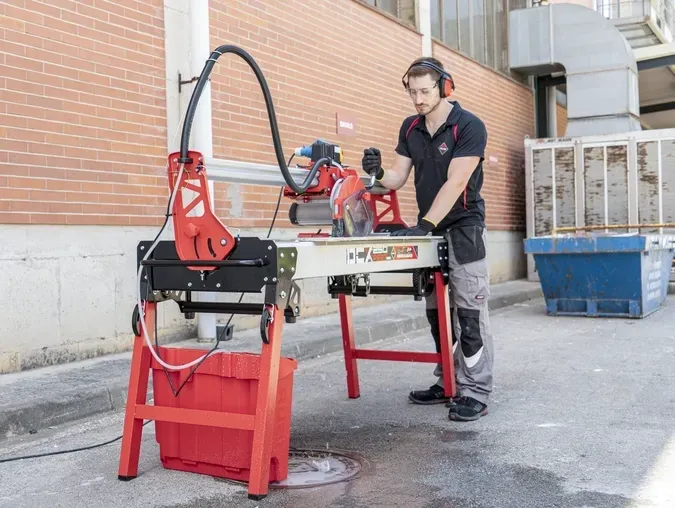
A wet saw is a powerful tool, so preparation matters. A careful set-up will improve safety, accuracy and finish quality.
Before cutting, check that:
During cutting, let the saw do the work. Do not force the material through the blade. A steady feed rate will usually give a cleaner result and reduce strain on the motor and blade.
After use, clean the tray, pump area and working surfaces. Slurry build-up can affect water flow and make the next cut less efficient.
Wet saws provide accurate, controlled cutting for hard materials such as porcelain, ceramic, stone and some paving materials, making them a valuable tool for confident DIY projects and professional work.
When choosing a wet saw, consider the materials you cut most often, the required cutting length and thickness, and practical features such as water cooling, dust control and portability.
Whether you need a compact model for occasional use or a heavy-duty machine for larger projects, KPT Timber offers a range of wet saws to suit different applications. For practical advice or help comparing models, browse the range online or speak to the team.