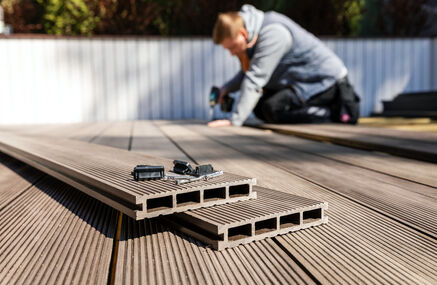

A great porcelain patio deserves a neat, durable finish that stays looking sharp for years. The secret lies in the joints. In this guide we cover recommended joint widths for 20 mm outdoor porcelain, the main grout and jointing options, how to choose colours that flatter your slabs, and the right way to install. We also flag common mistakes and how to avoid them, so your project ends with crisp lines and confident performance.
Porcelain’s dense, low-porosity body makes it strong and stain resistant, but it also means joints need to be well planned. Good jointing helps control movement, keeps water out of the bed, prevents edge chipping and ties the whole surface together. For larger areas, you or your installer should also plan movement joints in line with the latest update to BS 5385-3 so the system can handle thermal changes outdoors.
For rectified 20 mm outdoor porcelain, a typical joint width is 3 to 5 mm. This keeps lines clean, allows for small dimensional tolerances and gives enough space for grout to bond properly. If the tiles are not rectified, allow a little more.
Quick rule of thumb:
Best choice for porcelain patios: ProJoint RapidFlow Brush In Porcelain Grout
RapidFlow is formulated for porcelain, works from 3 mm joints, and is designed for use on a permeable bed. It delivers a neat, stain-free finish and is ideal for pedestrian areas like UK patios and paths. Available in neutral, light grey, mid grey, basalt and black, so you can match or contrast with your slabs.
When RapidFlow is the right call

ProJoint Fusion (brush-in, all-weather)
Great for natural stone and concrete setts or flags around your porcelain area, but it is not positioned as a porcelain product. Use it on adjoining stone paths, edging bands or mixed-material projects, not in porcelain joints.

ProJoint Titan (two-part epoxy, heavy duty)
A high-strength grout for stone or concrete, including vehicular areas up to 10 tonnes. Not suitable for porcelain, keep Titan for driveways or heavy-use stone zones and stick with RapidFlow for porcelain.

Colour can make or break the finish.
Explore our porcelain paving range to help you decide.
It may be necessary to tailor the method to your chosen products, but these steps reflect current best practice:

You can find our current jointing range here: KPT Timber Jointing Compounds.
Choose by joint width, application method and colour to match your paving. For porcelain set on a full bed, consider a porcelain-specific flowable grout or an external tile grout approved for outdoor use and 3–5 mm joints.
Within this range you’ll also find a selection of other products such as jointing squeegees, porcelain paving cleaner and paving tile spacers to help you with all of your patio laying tasks.
Neat, durable joints are what make porcelain patios look expertly finished. Select the right joint width, pick a product designed for outdoor porcelain, and follow a careful application and wash-off routine. Explore the range here: Jointing Compounds and don’t forget to browse our Porcelain Paving for matching slabs.